01
Private by default. Every project, workflow, and trigger starts visible only to its creator. Sharing is always opt-in, and the owner controls both the audience and the access level.
Four years of AI progress shared one blind spot: it assumed the unit of adoption is the individual. One human, one agent, one laptop. orqo is built on the opposite bet — and once you make it, everything else follows.
Three ideas shape everything it does.
Not a personal tool. When the whole company works in one harness, what your people learn about making AI perform becomes an asset the organization keeps — instead of know-how that walks out the door.
Software anyone can run by describing what they want. The engineer talks to a builder that assembles workflows live; the accountant sees a card with a play button. Same system, each person at the depth they need.
More work can run where your data already lives, with frontier cloud reserved for what truly needs it. Control over your data and your costs is built in — not retrofitted.
AI is already inside your company. The only question is whether it's governed.
In most companies, AI adoption means every employee installs their own agent setup on their own machine, with their own API keys — in dotfiles, notes apps, browser extensions — their own automations touching company data that nobody else can see, reuse, or audit. Thirty employees means thirty fragile setups, thirty security surfaces, and zero shared learning.
Banning it doesn't work; your best people will route around the ban. Ignoring it works right up until the breach. The third option is a harness: one place where humans and AI agents work together, governed by design, not by policy document. Everyone cooks their own soup — and the company eats the risk.
Private by default. Every project, workflow, and trigger starts visible only to its creator. Sharing is always opt-in, and the owner controls both the audience and the access level.
Credentials never sprawl. API keys and OAuth tokens are encrypted and injected at runtime. They live in the harness — not on laptops, not in chat messages, not in soup.
Everything shared is auditable. The activity feed records the moments that matter for compliance and oversight: who shared what, who installed what, who ran what.
Everything shared is revocable. Access granted is access that can be withdrawn — at any time, by the owner, taking effect immediately.
A workflow that works shouldn't die on the laptop that built it.
John gets a clean card with a description, a Run button, and his results — running on Susie's credentials and her LLM configuration. Nothing to install, nothing to configure, nothing to break. Perfect for the colleague, client, or stakeholder who just needs the output.
A technical teammate opens the full workflow read-only — every stage, every agent, every prompt — to study it, review it, or help debug it. Governance includes the ability to look inside.
Susie publishes to the organization's library. Anyone installs their own copy, binds their own keys, and modifies their clone freely. Her original stays untouched; the pattern spreads.
Make the organization the unit, and the payoffs follow — leverage without headcount, knowledge that stays, efficiency that compounds, and risk you can finally see. The full picture is on the front page. What changes for your organization
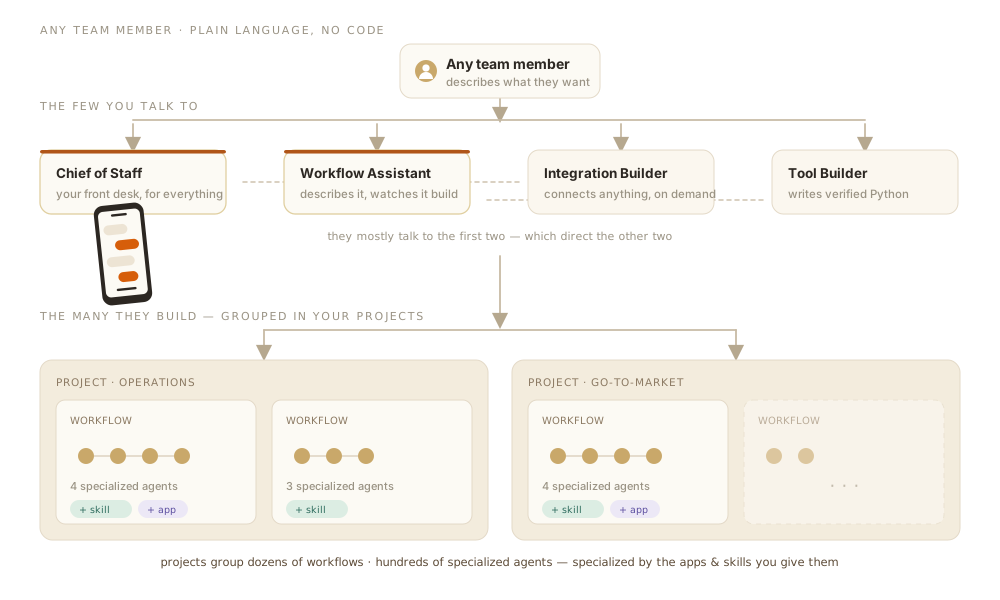
The organization is the unit for what the company knows. But the same system serves a second unit: the person — because from now on, everyone has an assistant that works with them for years, across work and private life.
That assistant keeps a personal graph — who's in your world, how you like to work — private to you, separate from the company's shared knowledge, and shareable only in consent-based circles with the people you actually coordinate with. When you move on, the facts stay with the company; the assistant that knows you goes with you. An assistant that knows you
The argument above is a bet about how a company should hold AI. Here is the same bet as a working week: a Tuesday that goes the way you would hope, and the Wednesday that follows it — the one where the work you set up on Tuesday runs without you.
Preview is free. You bring your own LLM keys — encrypted and injected at runtime — and pay your provider directly. Teams of humans and their agents, working as one organization. Claim your slot